 Iris [菖蒲, ayame] is the name of a suit in traditional hanafuda decks. It is generally taken to be the fifth suit, representing the month of May [5月, gogatsu] or the number 5. In Korean, the suit is commonly called Orchid [난초, nancho] instead.
The cards in this suit all feature bluish iris blossoms. There are two Chaff cards, one Plain Ribbon, and one Animal. The Animal card of the Iris suit features an Eight-Plank Bridge [八橋, yatsuhashi] over a blue marsh.
¶ Name
The suit is usually called ayame [菖蒲] in Japanese, which refers to the the species Iris sanguinea, but the flower depicted on the card is actually a different species called rabbit-ear iris, or kakitsubata [杜若] in Japanese. The two species look similar, but ayame does not grow in moist soil along water and is not referenced in the Tales of Ise, unlike kakitsubata. Because of this, some people (including hanafuda manufacturer Ōishi Tengudō) claim that kakitsubata is the correct name of the suit, but a large majority of sources still call it ayame regardless.
¶ Cards
¶ Eight-Plank Bridge
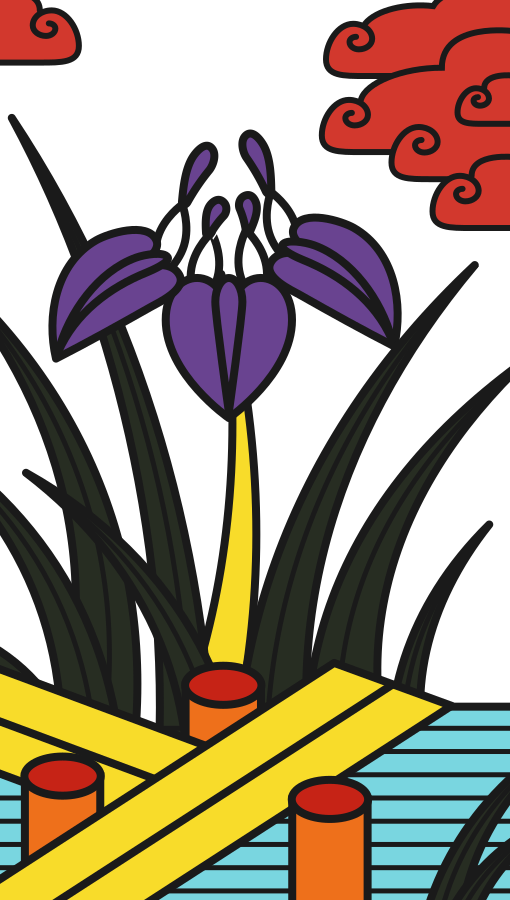 Iris with Eight-Plank Bridge [菖蒲に八橋, ayame ni yatsuhashi], or simply Bridge, is the animal card of the Wisteria suit.
The Bridge card does not feature prominently in the most popular Japanese hanafuda games, but in the Korean game of Min-Hwatu it forms a yaku together with the three other iris cards, and in the Hawaiian game of Sakura it features in the Animal counterpart of the Grass Ribbons yaku with Wisteria’s Cuckoo card and Bush Clover’s Boar card.
¶ Plain Ribbon
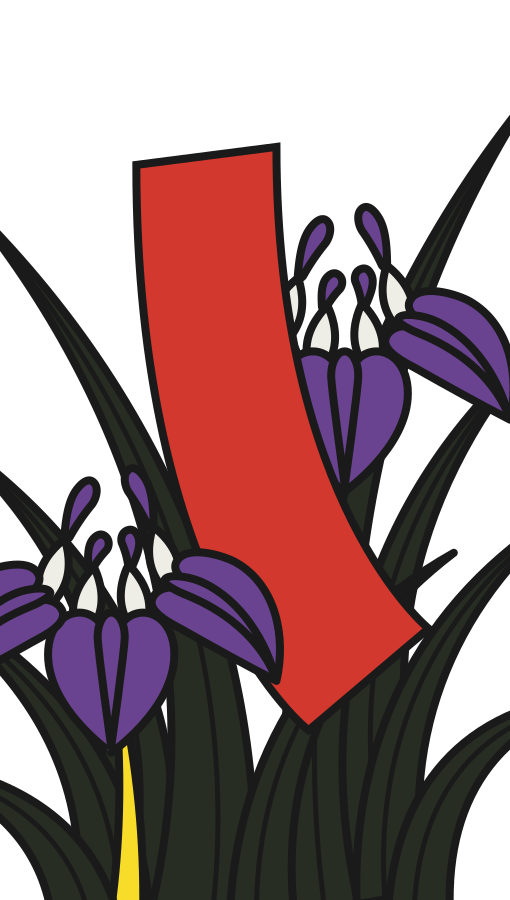 Iris with Ribbon [菖蒲に短冊, ayame ni tanzaku] is the Ribbon card of the Iris suit.
This card combines with the Wisteria Ribbon and Bush Clover Ribbon to form the “Grass Ribbons” yaku in many games, including Hana-Awase, Roppyakken, and Go-Stop. In other games such as Koi-Koi and Hachi-Hachi it merely contributes to generic Ribbon yaku.
¶ Chaff
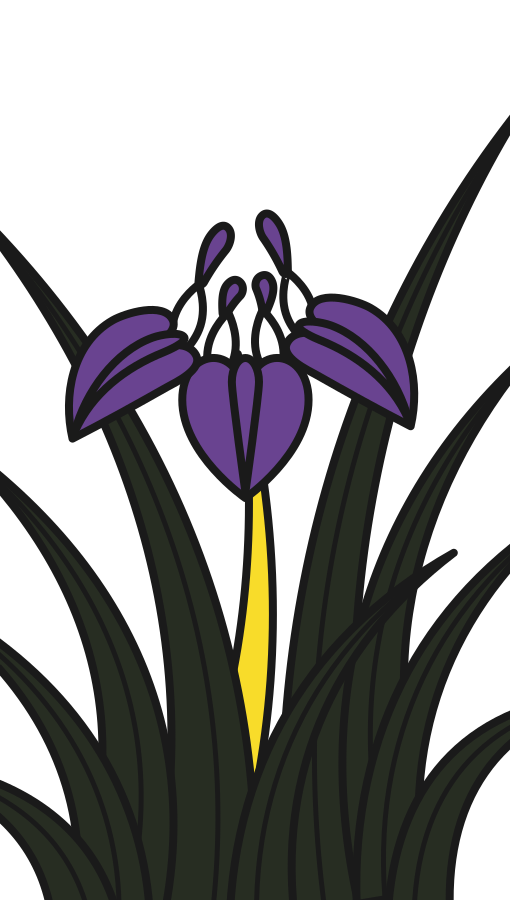
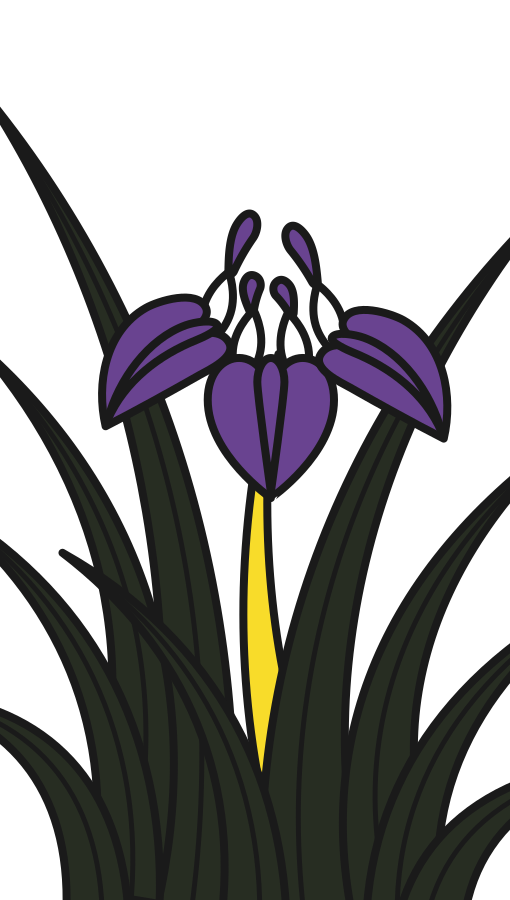 The Iris suit, like most, contains two Chaff cards.
In some designs, notably the [echigobana] pattern, these cards will each contain half of the following acrostic poem, possibly composed by Arihara no Narihira, from Section IX of the Tales of Ise. The first syllable of each line, when added together, spell “kakituhata,” an older pronunciation of “kakitsubata.”
| Japanese | Rōmaji | English |
|---|---|---|
| - | Karagoromo | I have a wife |
| - | kitutu narenisi | as close to me |
| - | tuma si areba | as a silken gown, |
| - | harubaru kinuru | and so I feel sad |
| - | tabi wo si zo omofu | to have journeyed so far. |
¶ Cultural significance
The Bridge card is a reference to Section IX of the Tales of Ise, a compilation of prose and poetry from the 10-11th century. In it a man and his companions travel to the land of Eight Bridges in Mikawa province, a swampy land with a zigzag of bridges built over its eight branching rivers where a lot of irises bloomed. As the man rested here, he composed the poem in the section above. The zigzag bridge became a well-known literary motif in Japan, often depicted with irises.

Eight-plank bridges are a style of bridge that can be found in Japanese gardens. They have eight sections in a zig-zag arrangement that cross over a marshy section of the garden where irises are typically planted, in reference to the Tales of Ise.
Kakitsubata irises bloom in May and June.
Depicted on the right: an eight-plank bridge in Kōrakuen, a famous Japanese garden in Okayama City, Japan. Picture by Daderot, 2011, public domain (CC0).
¶ External links
For examples of traditional art with the same motifs as this suit of hanafuda, see also the following category on Wikimedia Commons:
¶ Bibliography
- Fairbairn, John. “The Poems of the Echigobana.” Journal of the International Playing Card Society, Edited by Trevor Denning, XIV, no. 4, May 1986, pp. 97–102.
- Ōishi Tengudō, “花札の謎シリーズ!5月札『杜若に八つ橋』,” blog post, August 2014.
- Sazano Nozasa, “【花札の由来】5月「菖蒲に八橋」はなぜ初夏の札?皐月=水の月(五月雨)から図柄を読む/「杜若に八橋」,” blog post, December 2025.
- Rin & Char, “各月に描かれた絵柄の意味,” りんとちゃーの花しらべ, blog post, September 2019.
- Hanafuda Hawaii, “Symbols and Motifs in Hanafuda,” March 2025.