Chotto, Hana-Awase [ちょっと、花合わせ, lit. “a little Hana-Awase”] is a simplified variant of Hana-Awase for 2 to 4 players, designed by Nintendo for their workshop Try Playing Hanafuda! (Japanese title: Chotto, Hanafuda de Asobō [ちょっと、花札であそぼう], lit. “let’s play a little hanafuda”) at the Nintendo Museum in Kyoto. At the workshop, image recognition and projection technology are used to aid the players with playing the game and calculating points.
The game is designed to be quick and easy to learn for complete beginners of hanafuda, featuring a reduced deck, simplified scoring, and only a few yaku. Nintendo’s Japanese website also features Chotto, Hana-Awase: Ōyōhen [ちょっと、花合わせ 応用編], an intermediate version of the game for 2 to 5 players that introduces more elements of the full game of Hana-Awase. Both versions of the game were published in 2024, the year when the museum first opened.
This article will first introduce the beginner version of Chotto, Hana-Awase, and will explain the intermediate version further below, as well as differences with the full game.
¶ Setup
Game setup involves preparing and shuffling the deck, distributing the initial cards, and choosing the first player.
¶ Preparing the deck
The standard version of Chotto, Hana-Awase uses a reduced deck of only 32 cards. Remove all cards of the suits of  Wisteria,
 Iris,
Iris,  Willow and
  Paulownia from the deck.
¶ Choosing the first player
Players agree among themselves who gets to play first. When playing multiple consecutive games, the first player role is rotated to the next player each time.
When playing with 3 or more players, the rules do not specify whether turn order goes in clockwise or anti-clockwise direction. This point in the game would be a good time to decide the direction.
Most hanafuda games are traditionally played in anti-clockwise order, but clockwise order may be less confusing for some people.
¶ Distributing the initial cards
After shuffling the deck, the cards are distributed.
In 2-player games, 6 hand cards are dealt to each player and placed face up in front of them. 8 cards are dealt face up in the middle of the play area. The remainder of the deck is placed face-down next to the cards in the middle to form the draw pile.
In 3-player games each player gets 4 cards, and in 4-player games each gets 3 cards. The amount of cards in the middle remains the same.
If 4 cards of the same suit are dealt to the middle area, then a misdeal is declared. In this case, the cards are thrown in, shuffled again, and re-dealt.
¶ Gameplay
The first player plays their turn first, and turn to play passes in the direction that was determined earlier. Note that the core gameplay is slightly simplified compared to most hanafuda fishing games.
¶ Turns
On their turn, a player chooses a single card from their hand and plays it to the middle area.
- If it belongs to the same month as another card in the middle, then the cards match, and this matching pair is moved to the player’s score pile.
- If the played card matches with two or more cards in the middle, then the player may choose which one they capture.
- If the played card does not match any card, then it remains in the middle, and may subsequently be captured by other played cards.
If a card is played that matches something in the middle area, then the player must capture, as described above. However, there is no obligation to play a card that matches something, even if the player has one in their hand; they may, if they wish, elect to play a card that matches nothing.
As is typical of hanafuda games, each player’s score pile should be kept face-up and laid out in the play area, so that its contents are fully visible to all players. Ideally, the cards should also be arranged by rank (Brights, Animals, Ribbons, and Chaff) to make it easier to detect yaku and calculate scores.
After a card has been played from their hand, the player takes the top card of the draw pile, turns it face-up, and immediately plays it to the middle area in the same fashion.
After both cards have been played – one from the player’s hand, and one from the draw pile – the turn ends, and the next player takes their turn.
¶ End of game and scoring
The game ends when all players run out of cards in their hand and when the draw pile is exhausted. These events should occur together.
It is possible for there to be uncaptured cards remaining in the middle (if there were three or more cards of the same month dealt to the middle at the start of the game). Any remaining cards are simply ignored at the end of the game.
To calculate final scores, each player first adds up the total points of all their captured cards.
| Card rank | Value | Number in deck |
|---|---|---|
| Brights | 20 | 3 |
| Animals | 10 | 6 |
| Ribbons | 5 | 7 |
| Chaff | 1 | 16 |
See here for an overview of cards ordered by rank.
Then players check for yaku, and add the value of any and all yaku they made to their own total score.
The player with the highest total score wins the game.
¶ Yaku
The standard version of Chotto, Hana-Awase uses only 6 yaku. All these yaku can stack.
| Value | Name of Yaku | Composition |
|---|---|---|
| 40 | Poetry Ribbons 赤短 [あかたん, akatan] |
The three Poetry Ribbons with writing: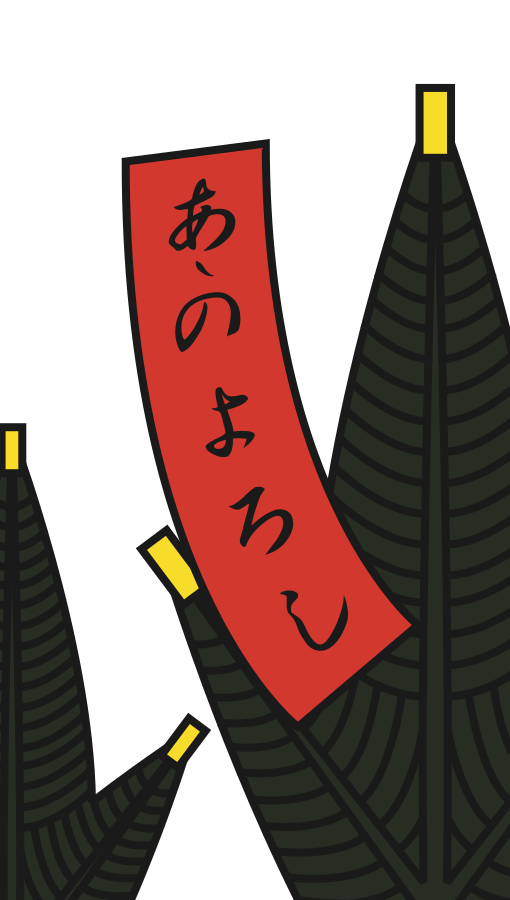 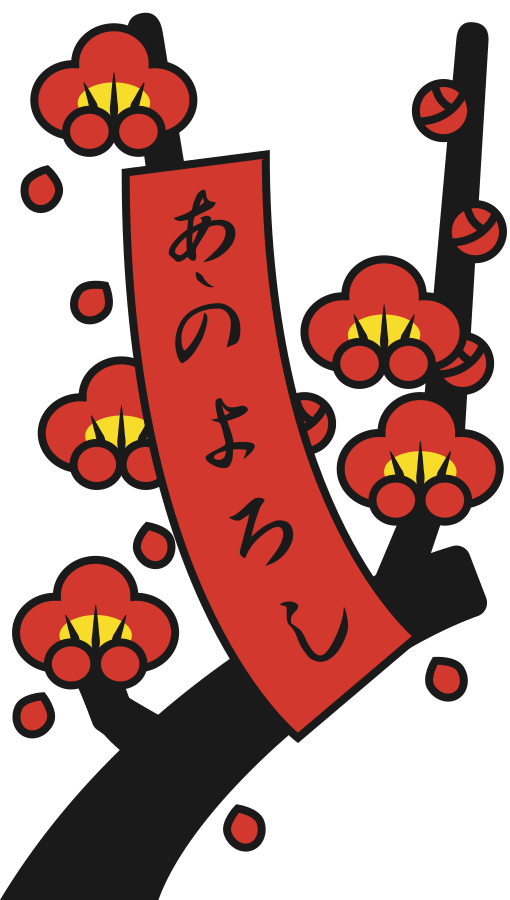 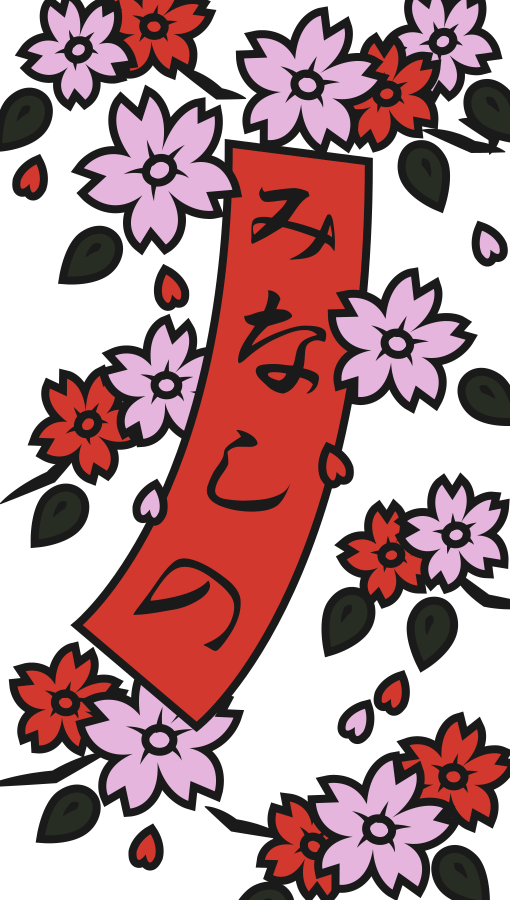 |
| 40 | Blue Ribbons 青短 [あおたん, aotan] |
The three Blue Ribbons: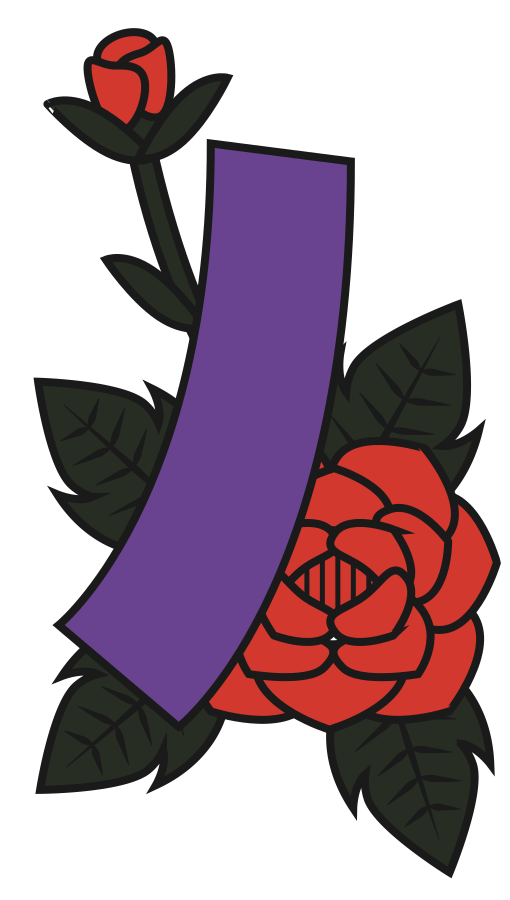 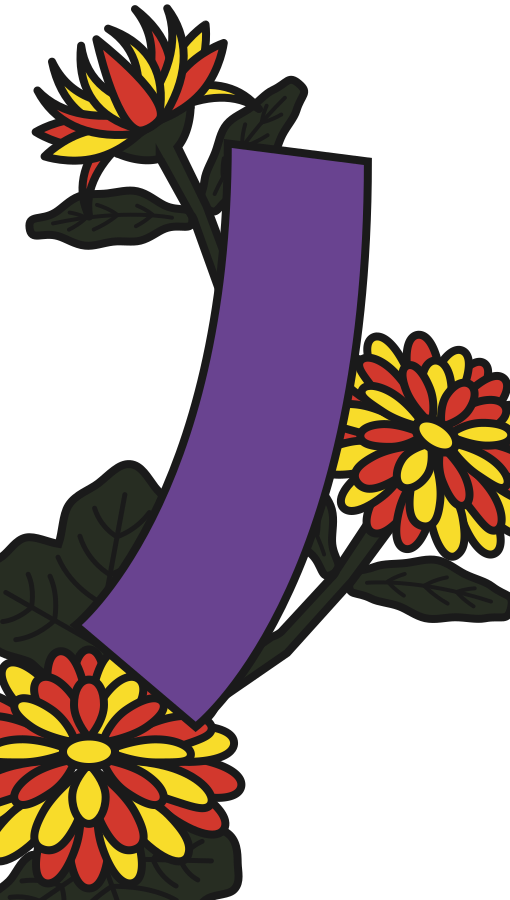  |
| 30 | Spring 表菅原 [おもてすがわら, omote sugawara] |
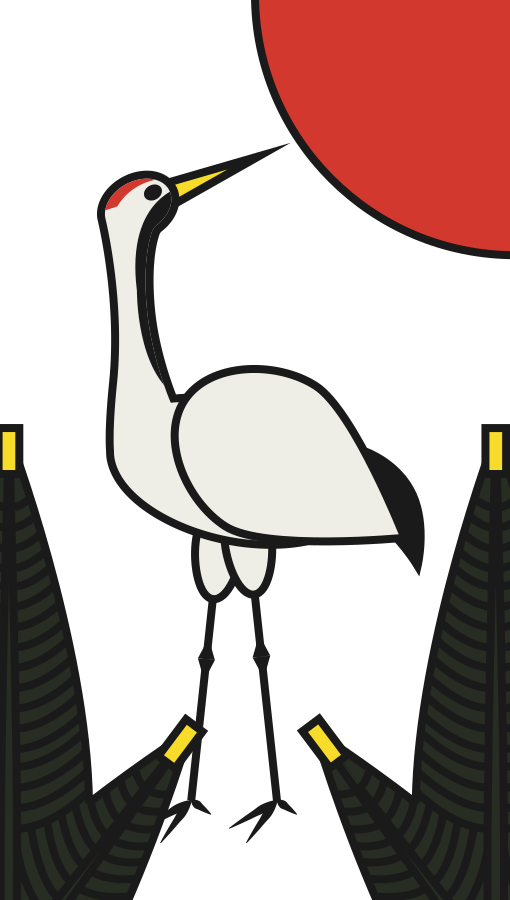 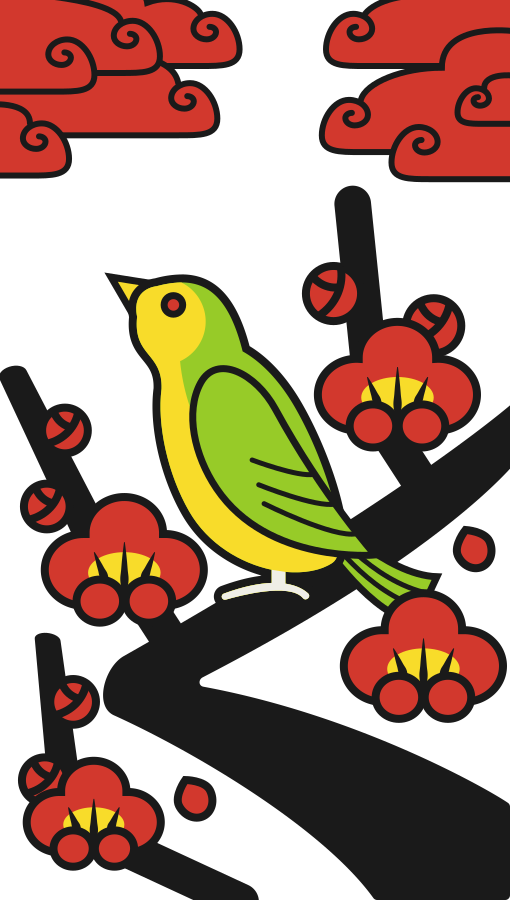 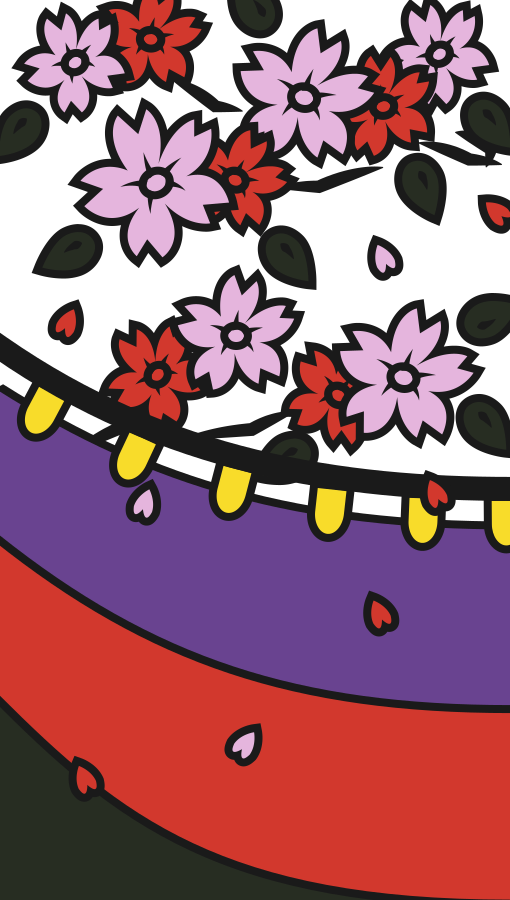 |
| 20 | Boar, Deer, Butterflies 猪鹿蝶 [いのしかちょう, inoshikachou] |
All Animal cards that depict animals that are not birds: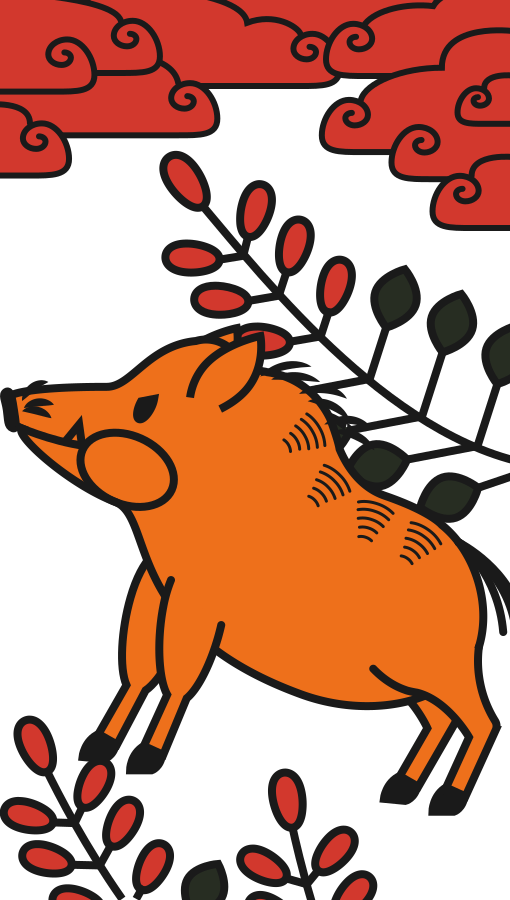 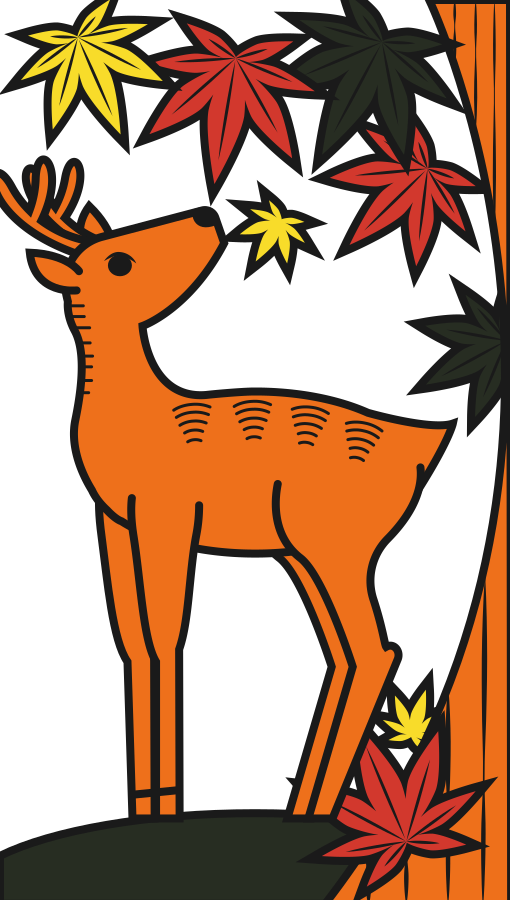 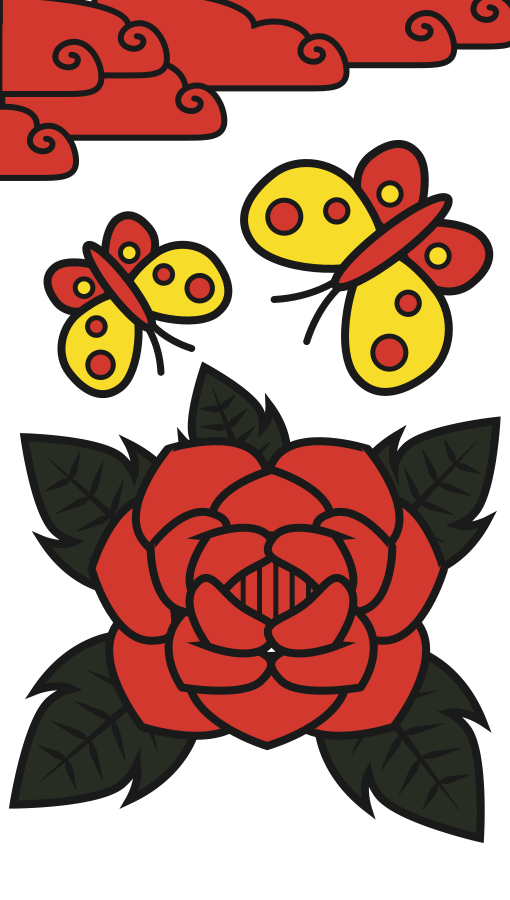 |
| 20 | Flower Viewing 花見 [はなみ, hanami] |
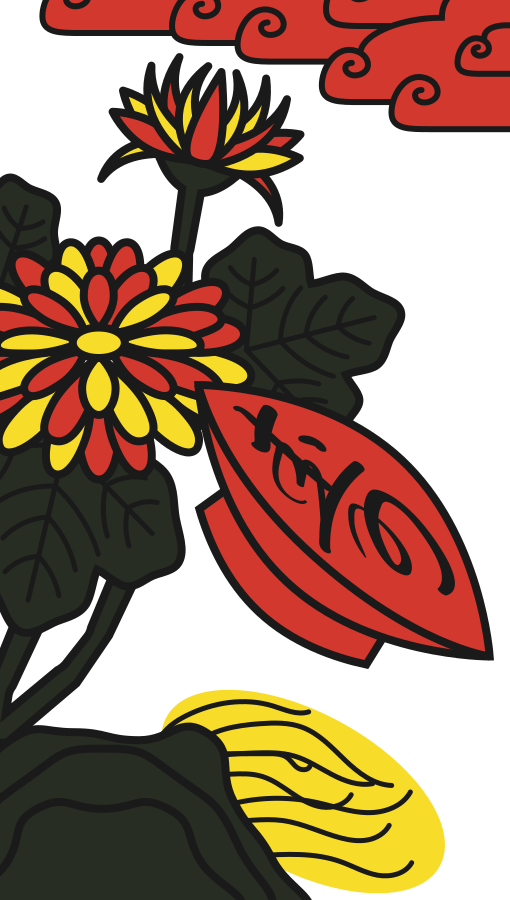 |
| 20 | Moon Viewing 月見 [つきみ, tsukimi] |
 |
¶ Chotto, Hana-Awase: Ōyōhen
Chotto, Hana-Awase: Ōyōhen [ちょっと、花合わせ 応用編] is the intermediate version of the game, aimed at people who are already comfortable playing the standard version of Chotto, Hana-Awase. It introduces more elements of the full game of Hana-Awase, namely:
- The entire deck of 48 cards is used.
- In 2-player games, deal 10 cards face-up to each player and 8 to the middle area.
- In 3-player games, 7 cards to each player and 6 to the middle.
- In 4-player games, 5 cards to each player and 8 to the middle.
- In 5-player games, 4 cards to each player and 8 to the middle.
- All yaku of Hana-Awase are used (10 additional yaku, of which a few are mutually exclusive).
¶ Advancing to full Hana-Awase rules
Once players are comfortable with the Ōyōhen rules, they are encouraged to start playing with full Hana-Awase rules. The following rules are added:
- Games are typically played with 3 players.
- A full game lasts 12 rounds instead of only 1, with scores carrying over between rounds. (Games with fewer rounds may also be played, such as 3, 6 or 9 rounds. Determine the amount before starting to play.)
- The first player or “dealer” is determined by having each player turn open a face-down card. The player with the card whose corresponding month comes earliest in the year gets to play first, the second earliest plays second, etc. If two or more cards have the same month, the highest ranked card wins. Take seats so that the second player sits to the dealer’s right, and turn order goes anti-clockwise.
- Hand cards are dealt face-down and players keep their hands hidden from other players. (Traditionally in 3-player games, the dealer first deals 4 cards to each player, then 3 to the middle, then 3 to each player, then 3 to the middle.)
- If there are three cards of the same month in the middle area, playing the fourth card of that month will capture all four cards.
- The game uses a zero-sum scoring system. A par score of 88 points (in 3-player games) is subtracted from each player’s captured card score. The value of any yaku made is payed by each opponent to the one who made it.
The score formula for 3-player games is(Player's Total Card Points - 88) + (Total Value of Player's Yaku x 2) - Total Value of All Opponents' Yaku
For more detailed explanations, see the End of Round and Scoring section of the Hana-Awase article. - A number of optional rules may be added. See Hana-Awase Variations.
¶ External links
- Game rules in Japanese on Nintendo’s official website:
- Chotto, Hana-Awase
- Chotto, Hana-Awase: Ōyōhen
- Hana-Awase (Nintendo’s rules for the full traditional version of the game)
¶ See also
- Ino-Shika-Chō, another simplified variant of Hana-Awase, designed for young children to play with an adult